Late Night @ UMD
Overview
Late Night @ UMD is a human-centered design project that explores how University of Maryland students navigate campus resources after 9 PM. The project focuses on reducing decision fatigue and confusion during late-night hours by centralizing information and prioritizing clarity, trust, and real-time availability.
This case study combines qualitative research with iterative interface design to demonstrate how thoughtful interaction design can support users during moments of fatigue and stress.
The Problem
UMD students regularly remain on campus late at night for academics, work, and social involvement. While many campus resources exist—such as food options, transportation services, libraries, and safety resources—students often struggle to access them efficiently.
Key challenges include:
Information scattered across multiple websites and platforms
Interfaces not designed for tired or stressed users
Difficulty knowing what resources are available in the moment
As a result, students rely on a small set of familiar options, abandon potentially helpful resources, or give up entirely.
Research & Discovery
To better understand late-night student behavior, I conducted semi-structured interviews with five undergraduate students, including on-campus residents, commuters, and off-campus students.
Key Findings:
Students are commonly active on campus between 9 PM and 1 AM
Food access is the most urgent late-night need
Transportation exists but is often confusing or restrictive
Students default to Google or group chats when information is unclear
Fatigue amplifies frustration and decision fatigue
A recurring theme across interviews was that clarity matters more than completeness late at night.
Personas
Based on interview data, I developed three personas to represent common late-night user types:
The Tired Academic — prioritizes efficiency, clarity, and reassurance while studying late
The Social Navigator — seeks food and open spaces after activities
The Commuter Planner — values reliable transportation and clear rules
These personas helped guide feature prioritization and interface hierarchy throughout the design process.
Journey Mapping
I mapped a late-night journey for the Tired Academic persona to identify emotional and cognitive breakdowns. The most critical pain points occurred before students accessed a resource, during the search and decision-making phase.
Key insight:
Decision fatigue, not lack of options, is the primary barrier during late-night use.
This insight directly informed a status-first design approach.
Design Solution
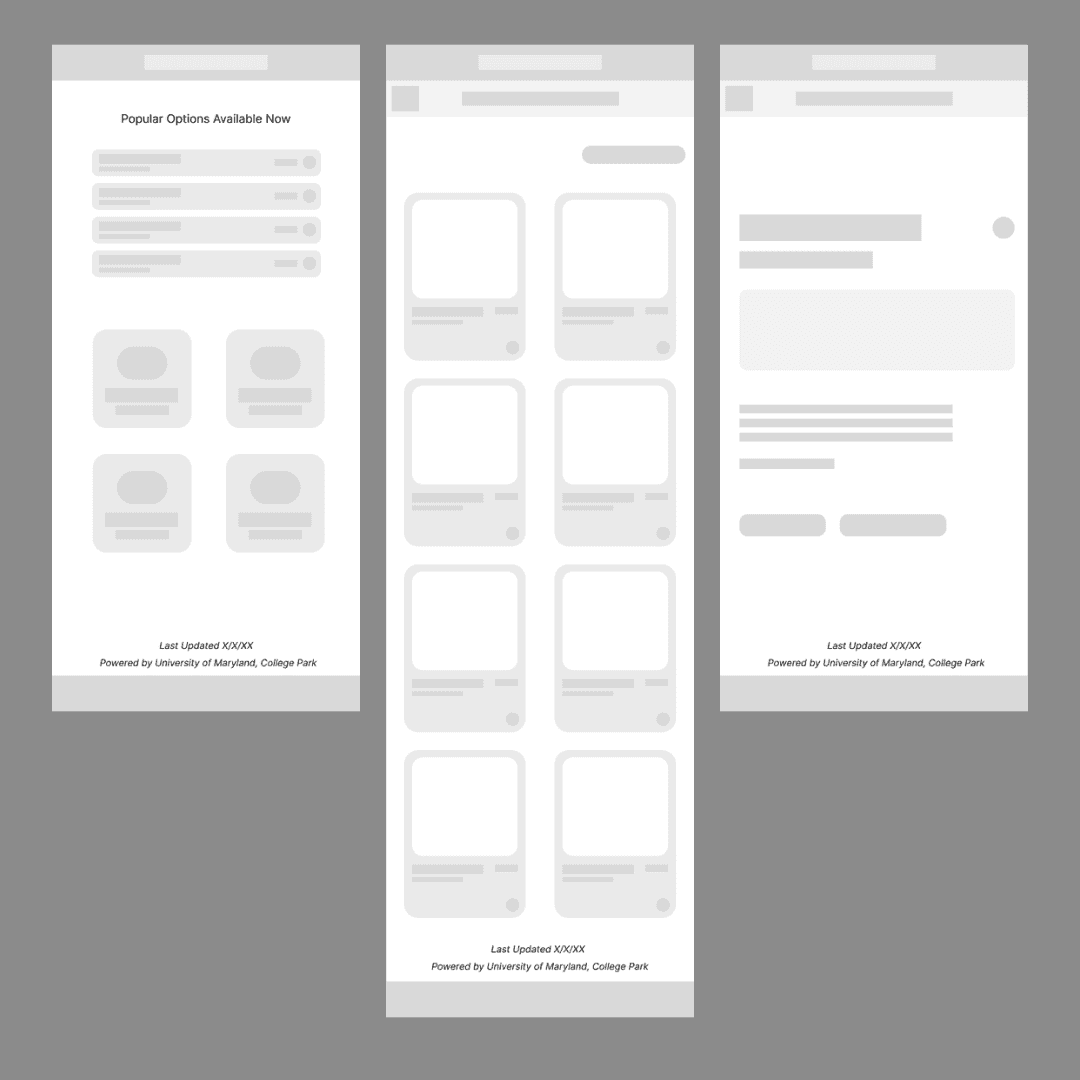
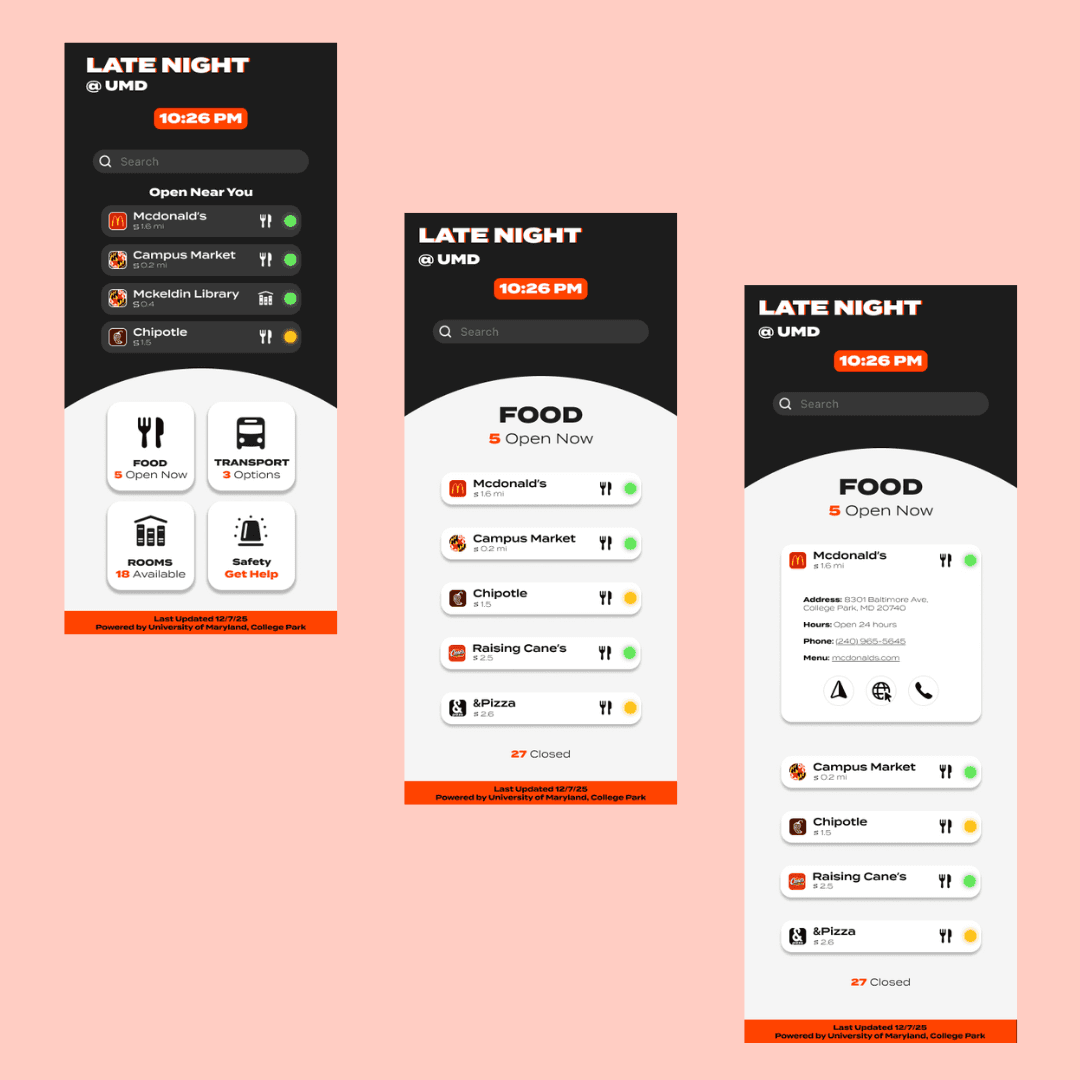
Late Night @ UMD is a mobile-first resource hub that shows students what campus resources are available right now after 9 PM. The interface prioritizes speed, clarity, and reassurance by visually highlighting availability and minimizing unnecessary choices.
Core Design Principles:
Clarity over completeness
Status before description
Consistency reduces effort
Design for low energy, not ideal conditions
Visual Design Decisions
Dark interface: reduces eye strain during late-night use
Green/yellow status indicators: enable quick recognition and align with user feedback to “highlight green if something is available”
Rounded cards and large tap targets: support accessibility and reduce cognitive effort

Hey, I'm Madison Hueston ⋆˙⟡♡
UX Designer & HCI Researcher
M.S. Human-Computer Interaction candidate at the University of Maryland.
I design human-centered technology with a foundation in both code and visual design.
I am probably making something right now.